Domestic Energy Performance Certificates (EPC)
Fast, Reliable EPC Assessments for Homeowners, Landlords & Estate Agents

What is a domestic EPC?
A domestic Energy Performance Certificate (EPC) provides an official energy efficiency rating for residential dwellings. First introduced in 2007, an EPC is a legal requirement whenever a residential property is built, sold, or let to a tenant. Once generated and registered, a domestic certificate remains valid for 10 years.
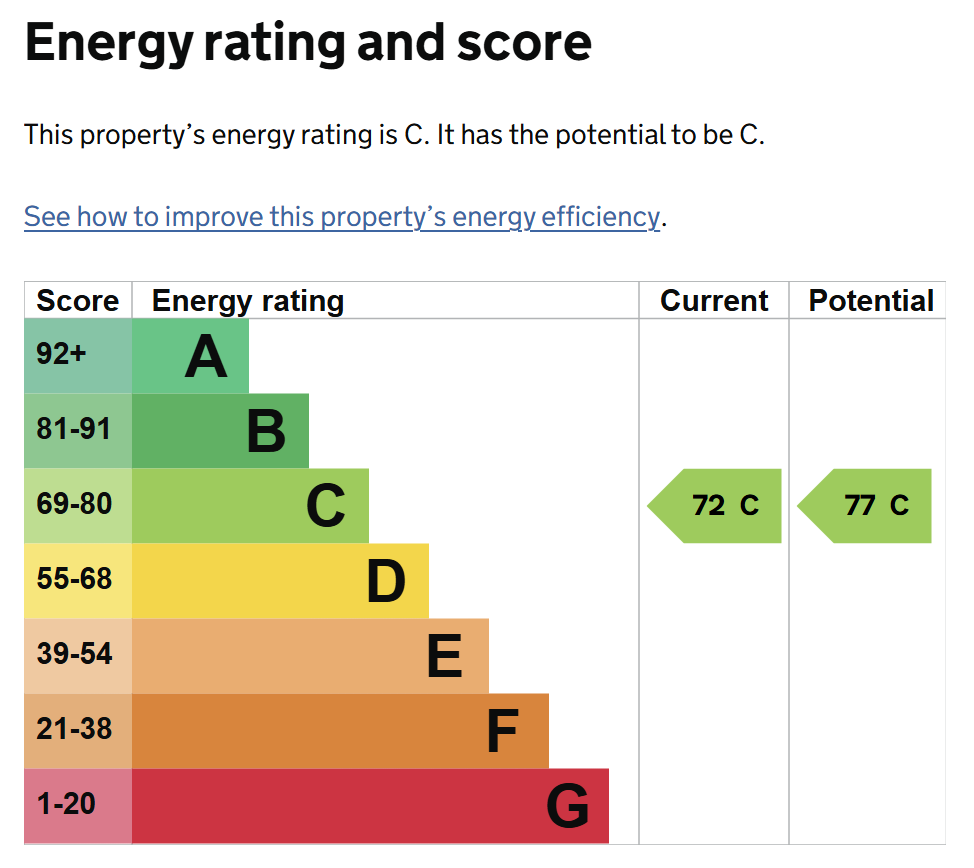
The efficiency score is presented on an alphabetical scale from A to G (with A representing the highest efficiency), corresponding to a numerical scale from 1 to 100. While the average rating for existing housing stock in England and Wales traditionally sits around a 60 (Band D), modern regulations are pushing national targets toward higher benchmarks to improve the sustainability of the UK's housing sector.
Domestic assessments generally fall into two distinct pathways:
Existing Dwellings (RdSAP): Assessed via a physical site visit to the property. Our energy assessor gathers on-site data regarding the building's fabric and mechanical services, processing it using Reduced Data SAP (RdSAP) software.
New Builds & Conversions (SAP): A purely desk-based architectural assessment. We utilise your design drawings and structural material specifications to calculate compliance via full SAP software.
How is the EPC Rating Calculated?
The core rating on a domestic EPC is primarily driven by the calculated cost to run the building per square metre. The underlying methodology uses standardised, regulated fuel price structures that map out the relationships between different energy sources (such as mains gas, heating oil, and grid electricity). This gives prospective buyers or tenants an standardised, objective preview of their projected utility bills.
Key Architectural and Structural Features
Beyond the overall headline score, an EPC evaluates individual structural and mechanical elements of a home, rating each from Very Poor to Very Good:
Thermal Envelope: Walls, floors, and roofs. High-performance, insulated building elements drastically reduce heat loss. While thick, traditional South West construction materials like cob offer fair native thermal properties, uninsulated solid stone walls transmit heat rapidly and require careful assessment.
Glazing Performance: Modern double or triple glazing significantly elevates a property's rating compared to legacy single-glazed windows.
Space & Water Heating: Systems with lower calculated operational costs yield much higher scores. While high-efficiency gas boilers perform reliably, and modern high heat-retention storage heaters offer a practical off-peak electric alternative, simple direct-acting electric panel heaters carry high operational costs and will suppress a domestic EPC rating.
Whether you are a homeowner preparing to sell, a landlord keeping up with changing rental compliance standards, or a developer completing a new residential project, Up Energy provides swift, accredited domestic assessments across the South West.

Frequently Asked Questions
-
An EPC is required when a building is let, sold or constructed.
-
There is a central register, publicly accessible, that lists EPCs. Check here to see if you already have one for your property.
-
The assessor visits the property to take measurements and photographs and collect information about heating, hot water, lighting and the building fabric. The assessor needs access to all rooms including the loft, if there is one.
-
The site visit typically takes between 30 minutes and 2 hours. The remainder of the work is carried out at a desk, though some assessors work on tablet computers to enter details as they go.
-
Costs are fairly low but can vary depending on the size and complexity of the property. Please get in touch if you would like a quote.

Explore Our Specific Services
-
![Icon representing Energy Performance Certificate services]()
EPC
Required when a building is constructed, sold or let. Covering Devon, Cornwall, Somerset and beyond.
-
![Icon representing SAP Calculations]()
SAP Calculations
New build and conversion energy calculations for residential properties.
-
![Icon representing SBEM Calculations]()
SBEM Calculations
Commercial new build and conversion energy calculations.
-
![Icon representing Part O Overheating compliance]()
Part O — Overheating
Dynamic thermal modelling for residential overheating compliance.
-
![Icon representing Thermal Modelling]()
Thermal Modelling
Advanced building energy modelling including BREEAM, TM52, TM59 and ventilation.
-
![Icon representing ESOS compliance]()
ESOS
Lead Energy Assessor qualified audits for ESOS compliance.






Read our Google customer reviews

-
![Five gold stars, indicating a five-star rating]()
"Alistair responded to my enquiry really quickly and carried out the survey a couple of days later. The report was ready same day! Would definitely recommend."
Howard Rushton –Domestic EPC
-
![Five star graphic from customer Google review of Up Energy Ltd.]()
"Alistair was very quick to respond to my call for an urgent EPC assessment for our house sale. Would highly recommend his professional service."
Graham Trude –Domestic EPC, house sale
-
![Five star graphic from customer Google review of Up Energy Ltd.]()
"I have worked with Up Energy on several projects now and they have always delivered on time while being easy to work with. Their pro-active approach makes the production of energy calculations and final certification at the end of a project a simple process."
Tim Thompson – Repeat client, energy calculations and certification

Request a Quote
For more information on our services please call, email or send an enquiry through the contact form.
Contact us
07515 442665 (Simon)
07974 567272 (Alistair)

Please read our Privacy Policy and Terms and Conditions before submitting.